Monday, September 26, 2005

Image hosted by Photobucket.com
Raptors in flight......poetry in motion.
Today was one of those days that I live for.
Over the past six years the last weeks of September and the first two weeks of October I travel to the northwest of the Port of Veracruz to Cardel/Chichicaxtle and Paso de Ovejas to observe the raptor migrations.
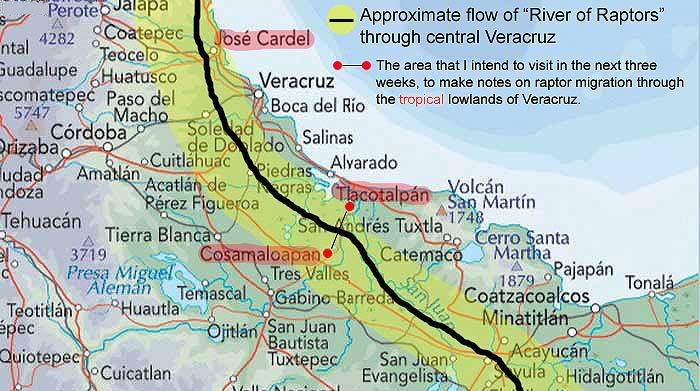
This year I decided to stay put here in Tlacotalpan and surrounding areas (55 miles to the south of Veracruz) and see if I could sort out the hawk migration as it passes through the vast tropical wetlands of central Veracruz.
For the past 20 days I have been going different spots along the the road between Tlacotalpan and Cosamaloapan (see map)
Up until Sunday Sept. 25th, I have made observations at 5 different locations and the results have been rather lackluster (by Veracruz standards). I did see nice movements of Mississippi Kites and the beginnings of the Broad-winged migration.
On saturday I was here in Tlacotalpan and not able to get out for the observation.
Saturday evening a friend here asked me if I had seen the hawks that came by. I started to ask some questions and he told me that he had seen several large groups come by. My curiosity was piqued.
I got up early on Sunday and decided to spend the bulk of the day observing right here in Tlacotalpan.
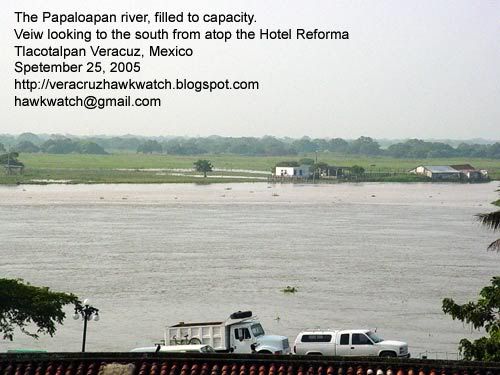
I walk 2 blocks from my house to the Hotel Reforma and walk up 4 flights of stairs to the rooftop. Here are some views View 1 View2 View3 View4
My first raptor sighting of the day was a resident Bat falcon perched on the radio atena atop the municipal building.Image hosted by Photobucket.com
I watched with a keen fascination as the Bat falcon flew out from its perch 5 times in search of food. The bat falcons aerial abilities are awesome!
I expected to see the bat falcon come back with a swallow, to my surprise with each return to the perch it had captured a dragonfly. I knew that dragonflies were the mainstay for Missippi Kites but I had never seen a bat falcon "chow down" on dragonflies before.
I got settled down in my plastic chair (in the only patch of shade that I could find on the rooftop) and I scanned the sky from 9a.m. until 12:30.
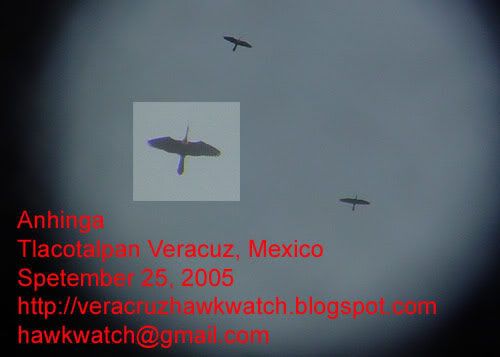
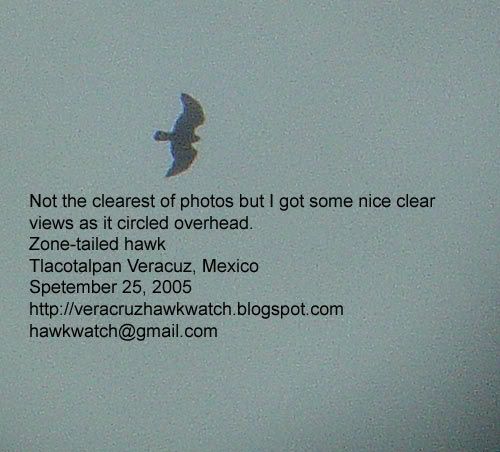
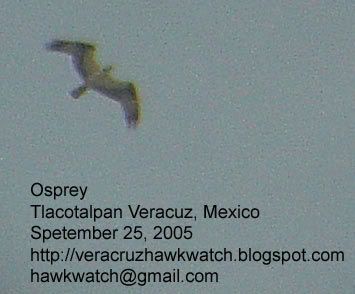
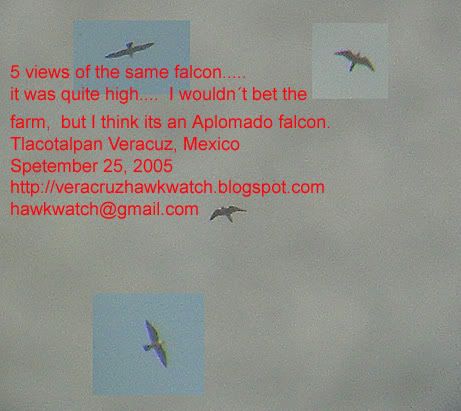
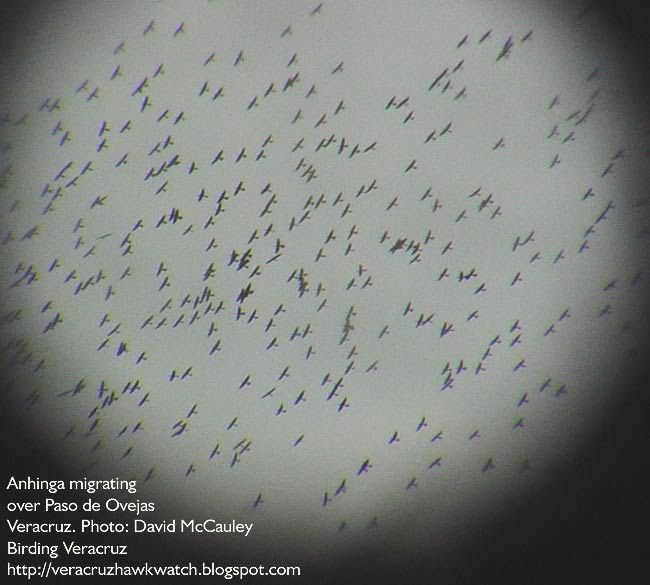
I saw some small groups of "early lift" Broad-winged hawks in addition, groups of migrating anhinga, a Zone-tailed hawk, 10 Osprey, a resident Aplomado falcon, and several Lesser, Yellow-headed Savannah vultures (residents), a high flying female Snail kite and 1 White-tailed Kite.
From 9am until 12:30 p.m., I observed around 300 migrating raptors (274 BW)
At 12:30 I left the (then shadeless rooftop of the hotel) and headed two blocks away to my house located in front of plaza Doña Marta,
(for those of you who follow my ramblings here on the weblog, you will recognize Plaza Doña Marta as the home for my spring hawkwatch (114,000+ counted this year during the month of April)
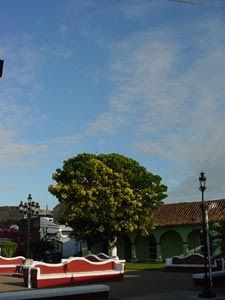
OK, I rush home (I always rush when there are raptors in movement .....LOL!) get my self a nice cold coke and hunker down in the shade of that big tree you see in the photo of Plaza Doña Marta.
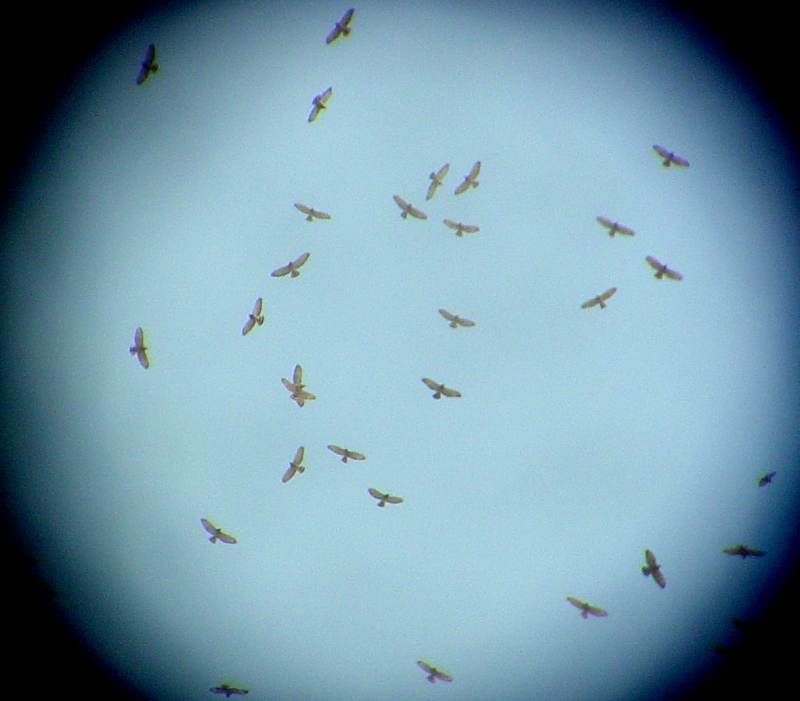
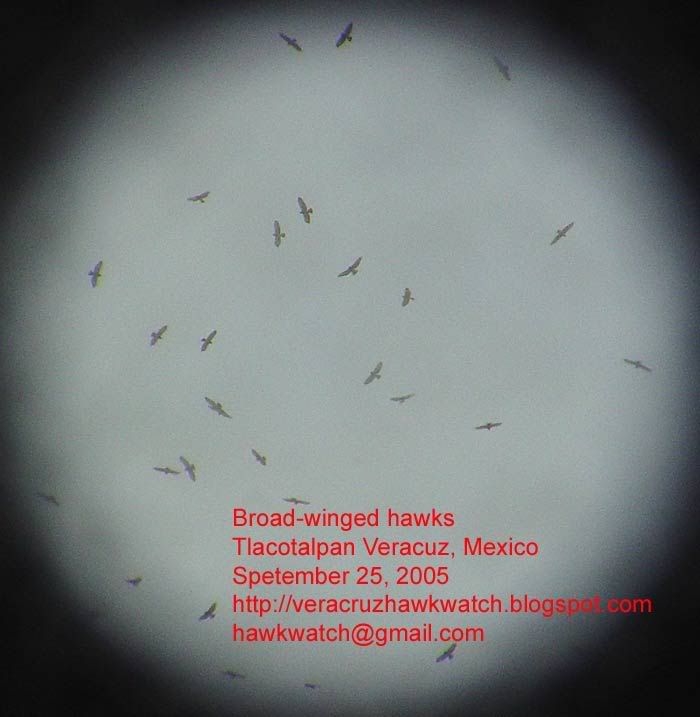
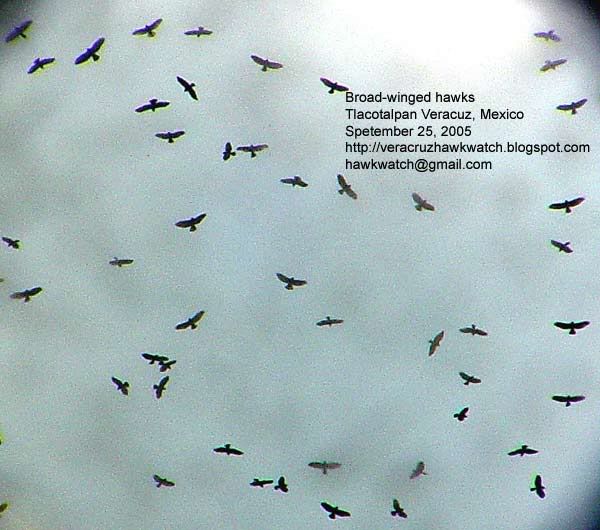
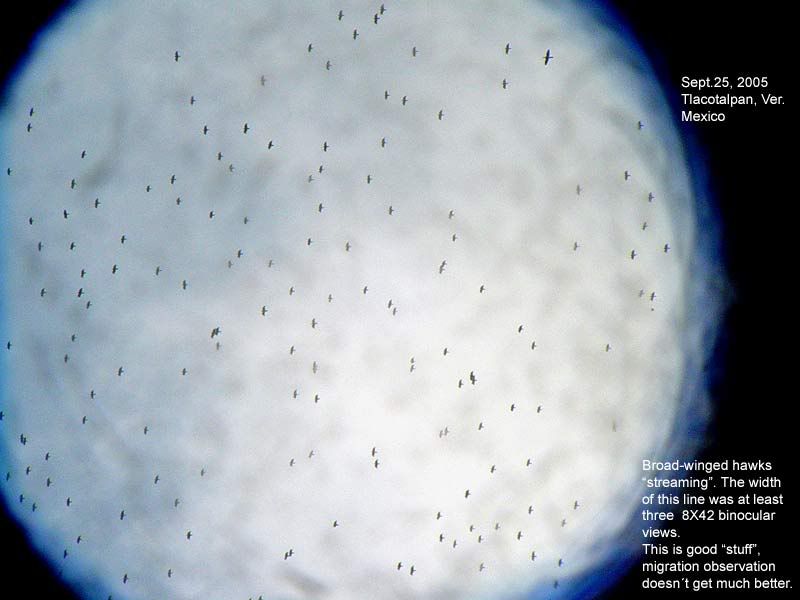
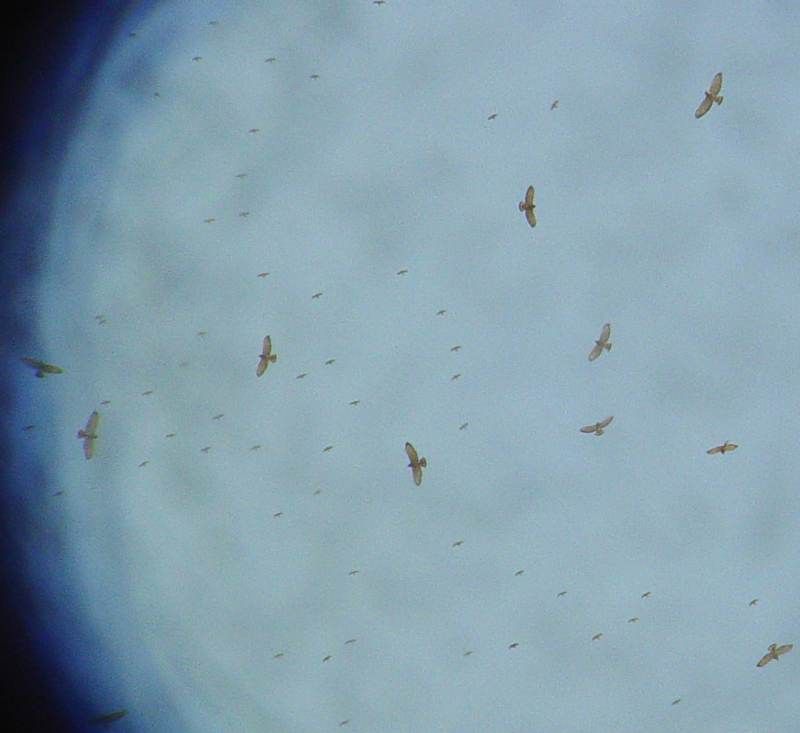
At approximately 12:55 I come across a forming "kettle" of Broad-winged hawks, I do a quick scan and see that this forming "kettle" is being fed by a massive line of Broad-winged hawks with a few Anhinga thrown in. The "kettle" that I had just spotted swells into a swirling mass of Broad-winged hawks!
Image hosted by Photobucket.com

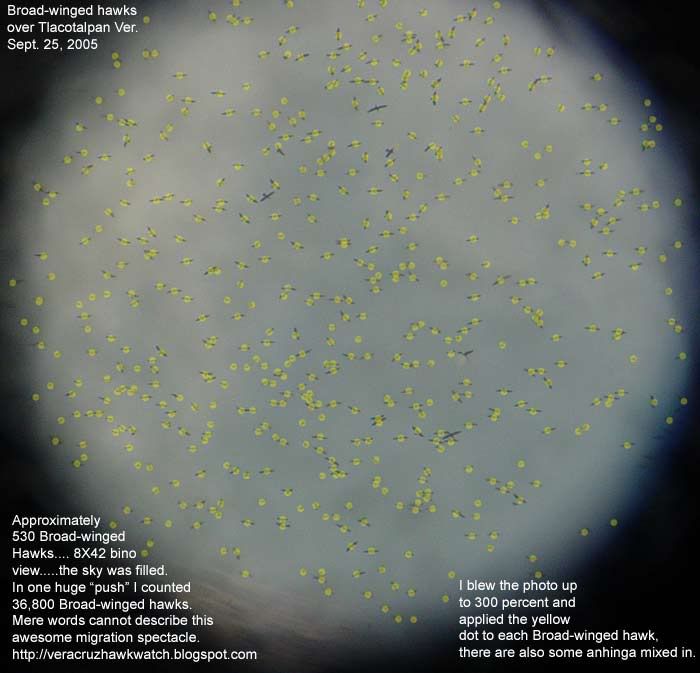
In order to count the hawks in the field of view of my binocular I put the image in Photshop and blow it up 300 percent there I place a yellow dot on each hawk. SEE PHOTO**Note on the photos: most of the above photos where taken using a technique called "binoscoping" I hand hold my digital camera (Sony Mavica 250CD to the eyepiece of my 8X42 binocular) its not an easy trick , and the results are far from crystal clear, but it gives you and idea as to what I am seeing.

Over the next 10 minutes, I count 36,800 Broad-winged hawks. (For those of you with some counting experience, the breadth (wingtip to wingtip) of the "line" or "stream" as the leave the "kettle" ranged from 20 to 200, I estimated an average of 75 to be on the conservative side. I registered 492 clicks in an 8 to 10 min. period.
491 X 75 = 36,825 This first big push (36,800+) was followed by four smaller "pushes" (10,338 -- 9,700--1,250--600), 58,688 raptors counted between 12:55 p.m and 14:00 !

Here is a summary of my observations for the day:
9:00a.m to 15:30 observation time

Broad-winged hawks....58, 962

Swainson´s hawks......2

Mississippi kites....6

Osprey ....10

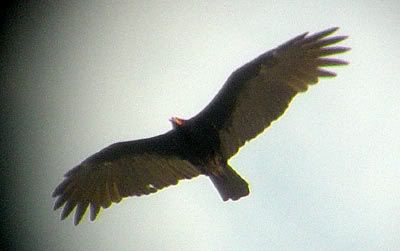
Turkey Vultures.......14

Cooper´s hawk......3

Sharp-shinned hawk.....2

Merlin.......1

Peregrine falcon......2

American kestrel.....1

Northern harrier....1

Zone-tailed hawk....1

Total .......59,005

Well, thats it for the moment, I hope that I was able to communicate adequeately some of the hawkwatch from Tlacotalpan.

I want to add a special note of appreciation to Patty Waites Beasley and Crew of the Corpus Cristi hawkwatch....I appreciate all of your time and efforts..you are my closest point of reference as to migrations from up north. I am glad to hear that you escaped hurricane Rita. Its a bummer that your festival had to be cancelled.

Keep up the good work and eyes to the sky!

And to Libby and Brock....Plaza Doña Marta says "Hi"


Friday, September 23, 2005


This is the point where I observed from yesterday (Sept.22) I am shaded by a huge mango tree. The light winds from the NNW create a rustling sound as it passes through the sugar cane. It is hot 32C - 90 F.
The raptor migration numbers were not high yesterday (235 counted in 5 hours) but the diversity of birds of prey (16 species) was well worth the time spent. Migratory raptors observed: Broad-winged hawk(79), Mississippi kite(136), Osprey (8), Turkey Vulture (11) Swainson´s hawk (1)
Non migratory raptors:
Black vulture, Roadside hawk, Northern Caracara, Snail kite, Great black hawk, White-tailed kite, Laughing falcon, Aplomado falcon, Lesser yellow-headed savannah vulture, Common black hawk and Black collared hawk. Its always a treat to see this type of diversity.

In addition to raptors observed I was able to observe 35 bird species in the patch of trees behind me. Great kiskadee, blue-gray tanager, yellow-winged tanager, Rufous-naped wren, vermilion flycatcher, melodious blackbird, wood stork, anhinga, eastern kingbird, buff-bellied hummingbird, aztec parakeet, white collared swift, social flycatcher, rufous-tailed hummingbird, ringed kingfisher, whit ibis, Ruddy ground-dove, plain chachalaca, groove-billed ani...........


A couple of men chopping wood nearby stopped to chat when they were done working and shared their "find " with me a scorpion that was underneath the bark of the dead tree that they were cutting up for firewood. (They had clipped the stinger off the point of the tail)
You never know what you are going to see on a hawk watch!

Thursday, September 22, 2005

Greetings to All from central Veracruz, Mexico:
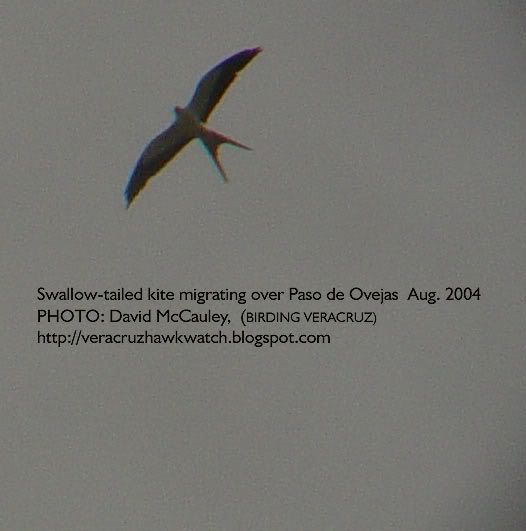
The 2005 hawkwatch is underway with the heaviest flows of migrating birds of prey yet to come. The Swallow-tailed kites and Mississippi kites have essentially moved through although MK continue to pass through.
This year I have had no takers on my fall raptor tours, so I am going to make the best of the situation and share with you some of my sightings, observations and notes as to raptor movements here in the tropical lowlands.

MAP


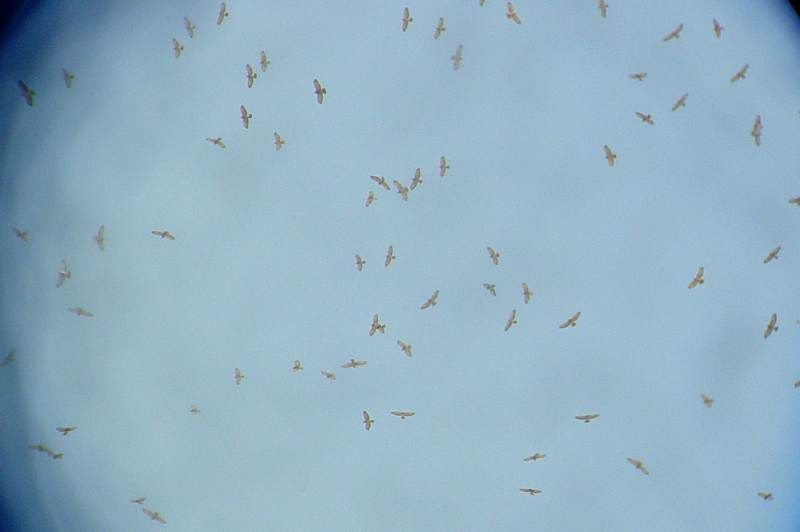
Photo of Broad-winged hawks

Thursday, September 01, 2005

Friday, May 06, 2005

Veracruz Fall 2005 Raptor Migrations - Info- Dates

Image hosted by Photobucket.com

August 15th the official count or River of Raptors begins here in Veracruz......I still have openings for my 2005 River of Raptors tours, you can contact me at veracruz.hawkwatch@gmail.com
to reserve your space.
There is an outline of the tour below;

Dates and information on the Fall 2005 Raptor Migrations.

Greetings Birders:
I have set three dates for the 2005 Fall Raptor Migrations
here in Veracruz.

Sept. 26 - October 3
(In 2004 1,156,036 migrating raptors were counted during these dates)

October 4 - 11
(In 2004 1,123,203 migrating raptors were counted during these dates)

October 12 - 19
(In 2004 1,556,772 migrating raptors were counted during these dates)

The combined total of migrating raptors counted last year, for the three dates thatI have selected was ...........3,836,011

Let me give you the basics of my fall Hawkwatch/Birding Tour:
8 Day/Seven Night Tour
$1,200 US dollars per person (based on double occupancy)
Add $200 USD for Single supplement.

The tour cost includes lodging, meals, ground transportation, trip to the mangroves and visit to the Museum of Anthropology in Xalapa.
Activities:
We will go birding in the mornings and the afternoons will be spent observing the raptor migrations. (You may expect to observe between 150 to 200+ bird species during your trip.)

For more information please contact me:
David McCauley
Birding Veracruz

veracruz.hawkwatch@gmail.com


Image hosted by Photobucket.com
A map of the area of "River of Raptors" The three Birding/Hawkwatch trips that I have organized this year will be based in Paso de Ovejas, Veracruz.

Image hosted by Photobucket.com
Observe migrating raptors from the shaded elevated deck. The pool below provides a nice break from the heat.


Image hosted by Photobucket.com
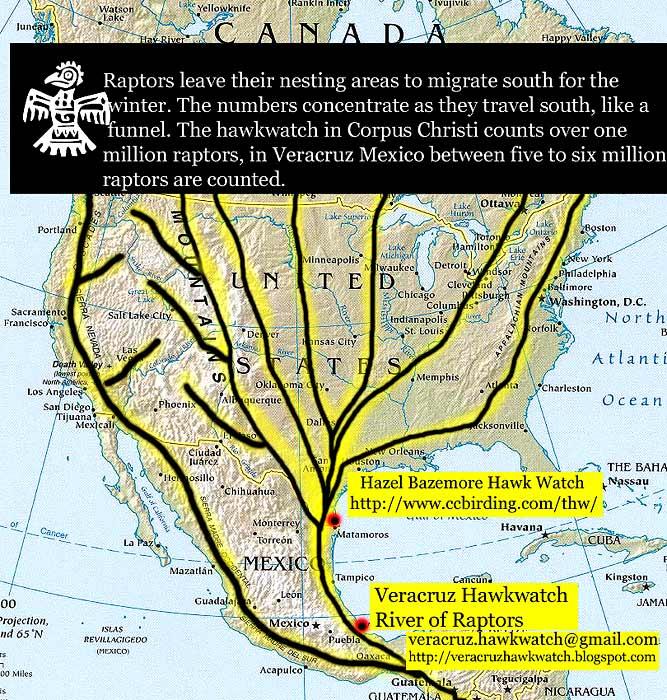
One of the thrills of the Veracruz River of Raptors is to observe the sheer numbers of migrating raptors. The geographical features of central Veracruz create a "funnel-like" concentration of southward bound birds of prey. Central Veracruz provides the highest concentrations of migrating raptors to be found on the entire planet.

Image hosted by Photobucket.com
The grace in flight of the Mississippi Kite is an awesome sight. In 2004 the season tally for Mississippi Kites was 177,088


Image hosted by Photobucket.com


Image hosted by Photobucket.com
In the distance, the town of Paso de Ovejas. The town is situated in a low valley like setting near the Atiylac River. I have scouted locations to observe raptors on the high ridges to the north and south of the town

Image hosted by Photobucket.com
I have selected several locations on the ridges which provide spectacular panoramic views (with shade). This view facing to the north provides a "front row seat" to amazing "kettles" and "streams" of migrating raptors.


Image hosted by Photobucket.com

Image hosted by Photobucket.com

Image hosted by Photobucket.com

Wednesday, April 06, 2005

Broad-winged Hawks Rule the Day 19,642 Counted!

The Broad-winged Hawks are passing over Tlacotalpan.


19,642  were counted today, April 5, 2005

Image hosted by Photobucket.com


Here are some links that you may find useful for infortmation on the Broad-winged Hawk


Peregrine Fund


Peterson
You can find additional information on this and other hawkwatches at:


HAWKCOUNT


Image hosted by Photobucket.com
This

is my photo blog on the spring hawkwatch here in Tlacotalpan. I began

the count on March 21 and as of April 5th I have counted 75,685

migrating raptors in 11 different species. I want to share with you

some of this marvelous migration that I am able to witness. I you are

reading this I would like for you to drop me a line, 

hawkwatch@gmail.com   It is fun to know who is visiting my

photo weblog.   David McCauley.

Image hosted by Photobucket.com


Physical setting for the spring hawkwatch, my front porch.


Image hosted by Photobucket.com
Artist rendition of the famous Posadas print "La Katrina" Painted by Tlacotalpan Painter Rafael Aguilera
Image hosted by Photobucket.com
Tlacotalpan is a UNESCO world heritage site. The town was founded by the Spanish in 1590.
Image hosted by Photobucket.com

Image hosted by Photobucket.com


Tally board here in Plaza Doña Marta for April 2.

Image hosted by Photobucket.com


Broad-winged Hawks kettle of the Plaza Doña Marta in Tlacotalpan, Veracruz

Saturday, March 26, 2005

Spring Hawkwatch 05 in Tlacotalpan Veracruz

Greetings:
The spring raptor migration here is Veracruz is underway.
I counted 4,626 migrating raptors yesterday (March 25) and we have a total of 9,127 as of March 21 when I began to count. CLICK HERE to see yesterdays report on HAWKCOUNT
I wanted to share with you some images of the setting of the hawkwatch.

David McCauley
hawkwatch@gmail.com


Image hosted by Photobucket.com

Image hosted by Photobucket.com

Image hosted by Photobucket.com

Image hosted by Photobucket.com

Image hosted by Photobucket.com

Image hosted by Photobucket.com

Image hosted by Photobucket.com

Image hosted by Photobucket.com

Image hosted by Photobucket.com

Image hosted by Photobucket.com

Image hosted by Photobucket.com

Monday, March 21, 2005

Greetings All:
Spring is officially here and this was my first full day of hawkwatch here in Tlacotalpan. We´re off to a nice start with 618 raptors observed among 8 species.
hawkcount daily report
The good news for all of you hawk watch enthusiats in the US and Canada,
THE RAPTORS ARE HEADED NORTH AND SOON TO BE IN YOUR NEIGHBORHOOD!.
We had a wind from the south for most of the day, (which is not favorable for raptor migration). We shall see what "mañana" brings.
Good birding,

Wednesday, February 16, 2005

Spring Hawkwatch 2005
I'm getting ready to conduct another hawkwatch from Tlacotalpan Veracruz.
Last year as some of you know I conducted a hawkwatch for the month of April and was able to count over 100,000 northward migrating raptors! This year I want to get started earlier with the count, I will keep you posted............
David
hawkwatch@gmail.com

Saturday, September 04, 2004


Now to the really good stuff!
The raptor migrations have begun here in Veracruz! If you’ve never experienced it is pretty mind boggling. Last year Pronatura Veracruz counted over 5.5 MILLION migrating raptors. The folks at Pronatura are one of the few groups doing anything about conservation and education here in Veracruz, I applaud their efforts.
(As a side note, three years ago when Tim Smart was here as a hawk watch counter he posted the daily results of the Veracruz count. I for one, really miss those daily reports on HAWKCOUNT/BIRDHAWK. The reports helped to give a true sense of the migratory marvel. I have mentioned it to both Norma Ferris and Rafael Rodriquez of Pronatura but so far the daily reports have not appeared. One of the mission goals of Pronatura is “environmental education” and the daily reports certainly contain migratory information.
If others out there miss the reports, I would encourage you to contact Pronatura Veracruz and see if they will share the information with the world.
pvecotours@infosel.net.mx


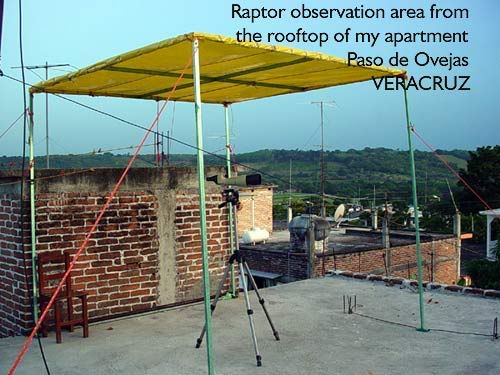
I have set up house here in Paso de Ovejas Veracruz SEE MAP. From the rooftop of my small apartment I have set up a hawk watch observation post. I have been able to determine that most of the raptor migrations from the Chichicaxtle count site pass directly over Paso de Ovejas. I will make an attempt to share with you via this weblog observation highlights as well as photos.

MISSISSIPPI KITES ANYONE???
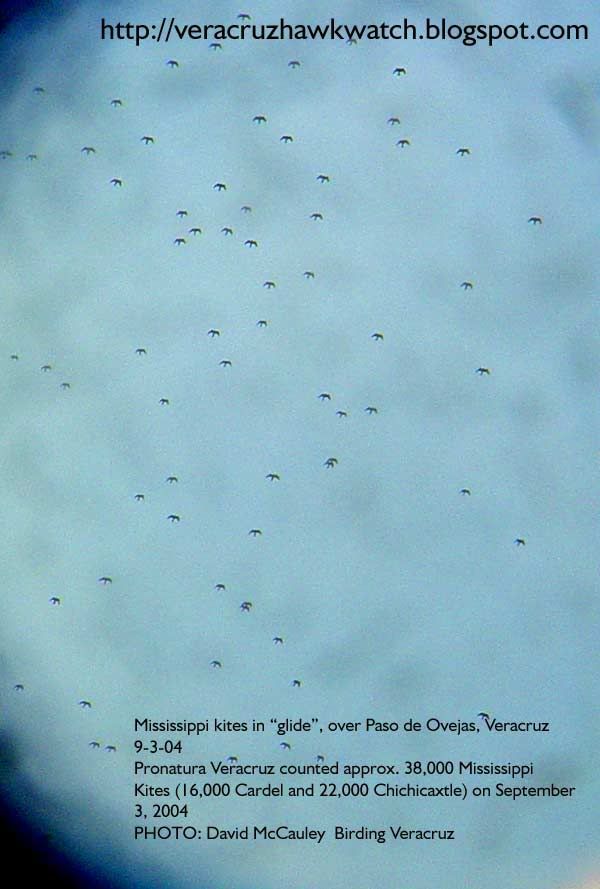
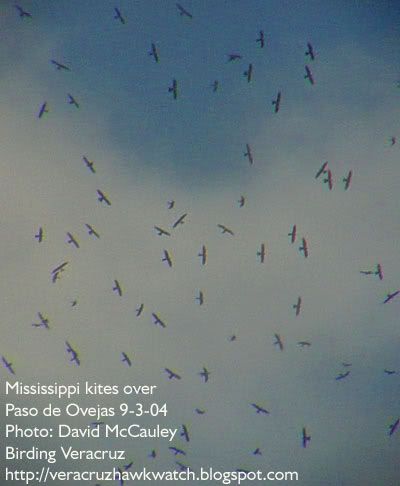
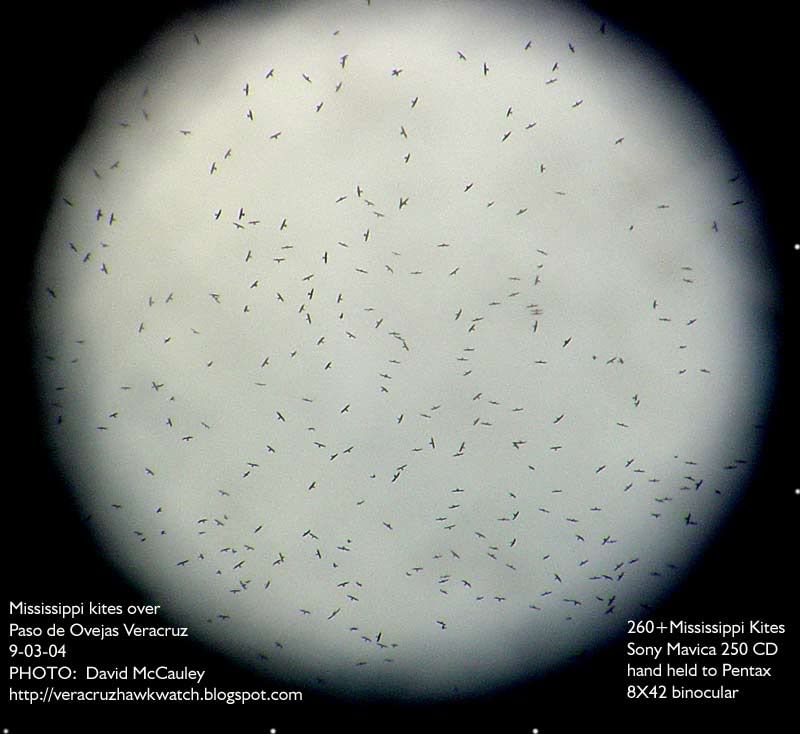
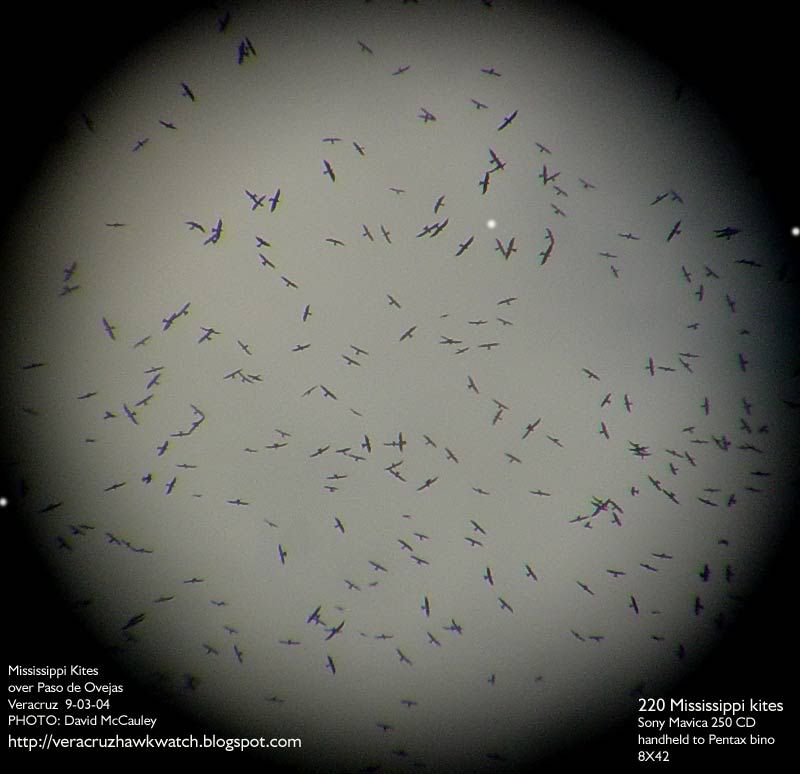
Yesterday, September 3, 2004 provides some of the best views of Mississippi kites of the season. Approximately 38,000 Mississippi Kites were counted by PRONATURA between Cardel 16,000 and Chichicaxtle 22,000
Here are some photos that I took from my rooftop viewing area here in Paso de Ovejas.
I observed a heavy “push” from 13:00 to14:00 with up to three lines moving through at the same time. Around 20,000 Mississippi kites passed overhead in the course of an hour!
Here are some photos. Enjoy!
Photo 1
Photo 2
Photo 3
Photo 4
Photo 5
Photo 6


Greetings from Veracruz:
For those of you who don’t know me, I’m David McCauley. I have lived in Veracruz for the last 12 years and began birding 6 years ago. I run a small birding tour business here in Veracruz, Birding Veracruz. I love Mexico. It is a wonderful country and its people are (for the most part) warm and friendly. It is of great concern to me the rapid loss of habitat here in Mexico. With over 115 species of migratory birds, (which either pass through or winter here in Mexico) concern over habitat destruction in Mexico and Latin America should be of interest to birders.
I note with some interest that a great number of birders in the U.S. have developed a “list fixation” and that issues such as habitat loss seems to be of very little concern. In many birding message boards conservation or environmental concerns are dismissed or banned.
Hmmmmm?
I don’t consider myself an environmental activist. Having grown up on a farm in central Washington and based on my observations here in Mexico, this farm boy thinks that it time to plant some trees south of the Texas border.
I am not much of a believer in causes and clubs or organizations. My goal in what remains of my life (I’m 51) is to purchase several small parcels (15 to 30 acres, each) of land in a variety of habitats here in Mexico and restore the original habitat. Its not much, but I believe that is a small step in the right direction.
The other project that I am working on here in Mexico are short presentations in the schools focusing attention on birds and their importance.
Small steps. I am optimistic that much can be accomplished here.